

Core Idea
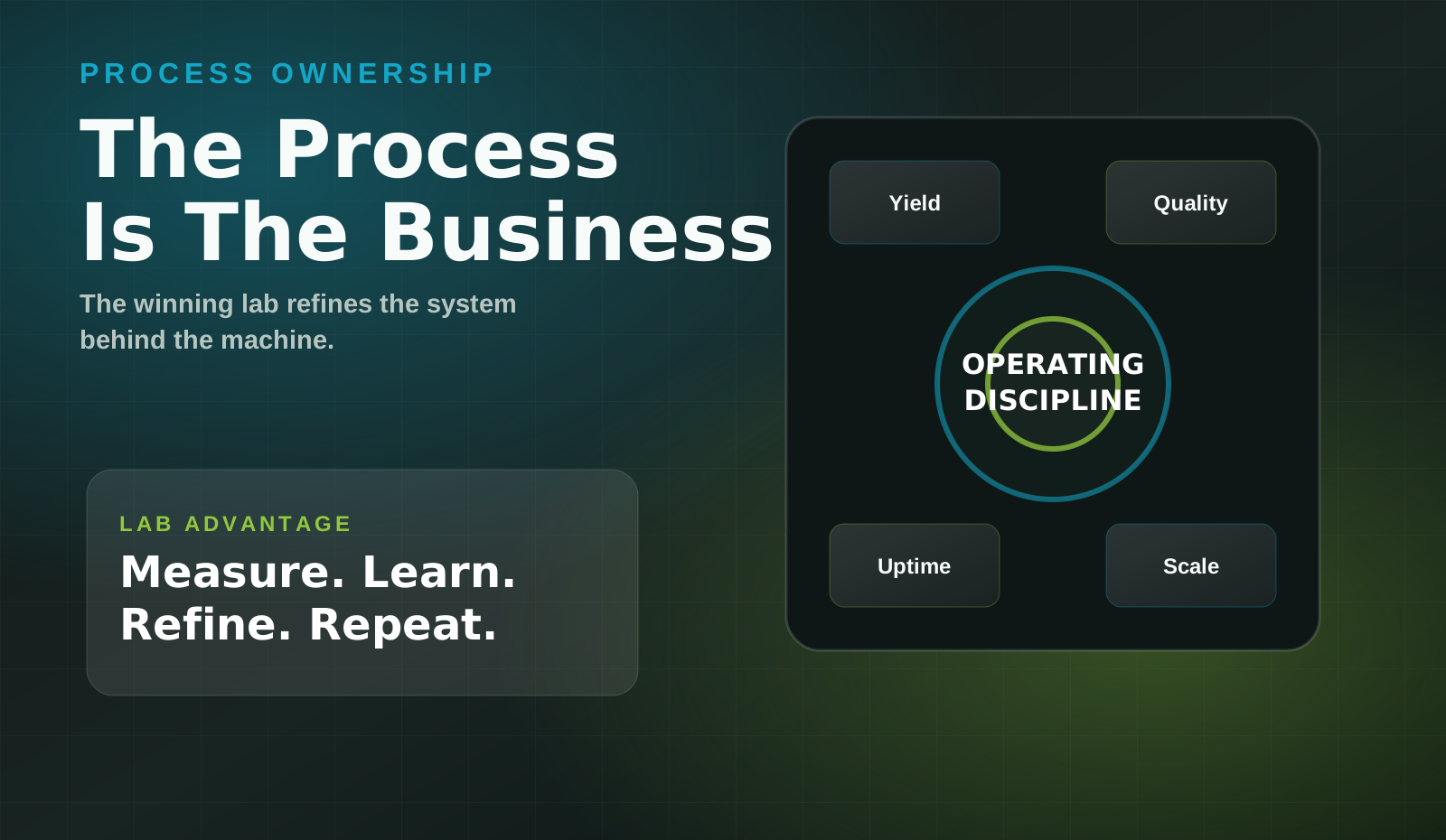
The extraction process is the business.
A lot of people misunderstand what it means to own an extraction lab.
From the outside, it can look simple: buy extraction equipment, put it in a compliant lab, run material through the machine, make oil, sell the product. That version of the business sounds almost automatic, as if the equipment itself is the company.
But that is not how real extraction works.
Where Value Lives
Real value is created in daily operation.
The equipment matters, of course. The facility matters. Compliance matters. But none of those things create a successful operation by themselves.
The real value is created in how the lab is operated every day: how material is prepared, how runs are managed, how temperature is controlled, how solvent is recovered, how throughput is improved, how losses are reduced, how quality is protected, and how repeatable the entire process becomes.
That is where the business actually lives.
Compounding Advantage
Small improvements inside the process become major advantages.
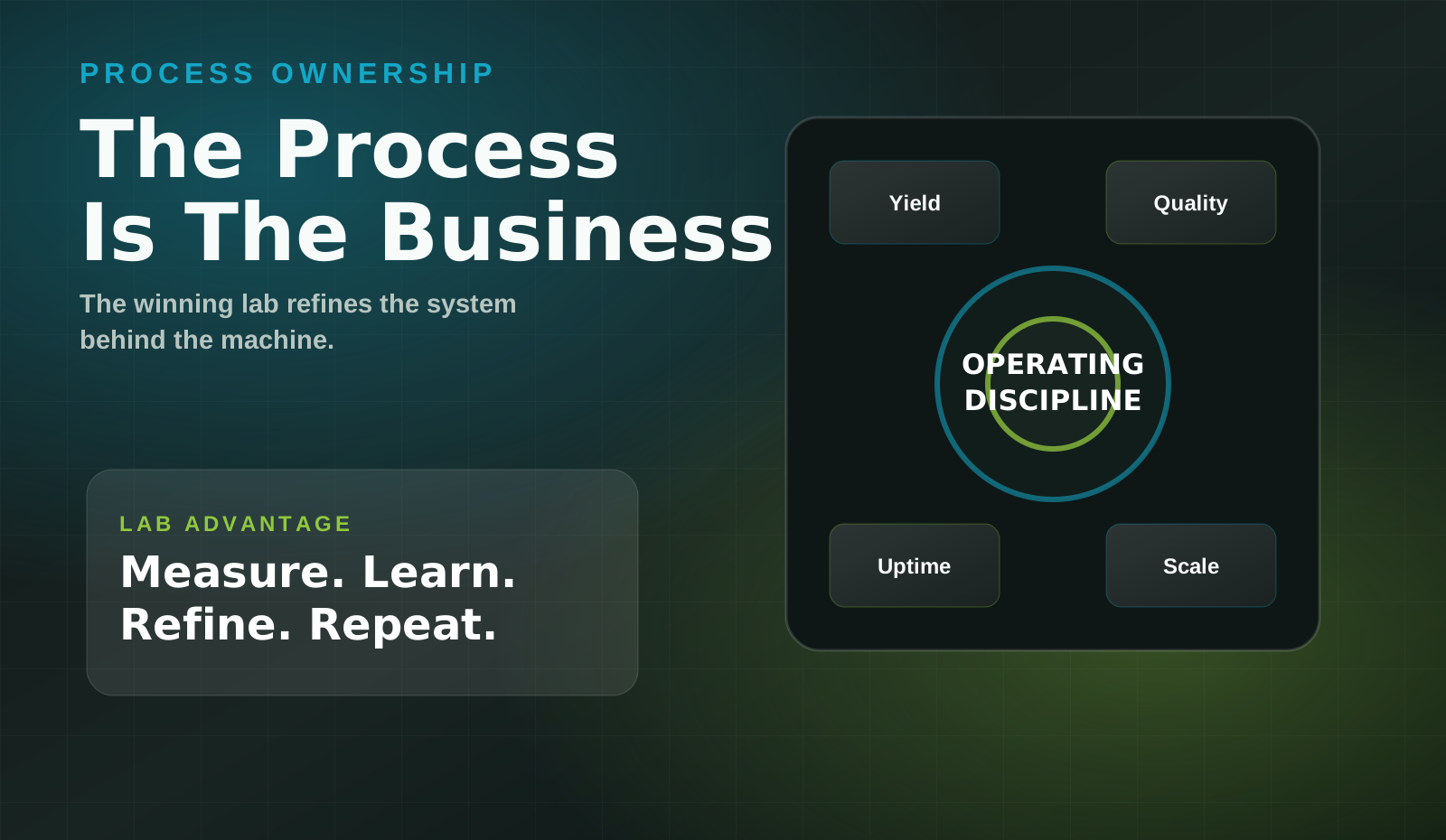
Owning an extraction lab means mastering the discipline of extraction itself. It means understanding every detail that affects yield, quality, consistency, labor, downtime, recovery speed, energy use, and scalability.
Small improvements inside the process can become major advantages over time. A few percentage points of better yield, a faster recovery cycle, cleaner workflow, fewer failed batches, or more consistent output can be the difference between a lab that survives and a lab that leads its market.
Extraction is not a button you press. It is a system you build.
The Competitive Gap
Two labs can buy similar equipment and get very different results.
This is also where competition happens.
Two companies can buy similar equipment and build similar rooms, but they will not get the same results. One lab may struggle with bottlenecks, inconsistent product, and constant troubleshooting. Another may run with discipline, predictable output, and a clear path to higher volume.
The difference is not just the hardware. The difference is the operating knowledge behind the hardware.
Lab A: Equipment without process discipline
- Bottlenecks appear late
- Output changes batch to batch
- Troubleshooting becomes the operating rhythm
Lab B: Equipment guided by process knowledge
- Constraints are measured
- Output becomes predictable
- Scaling has a controlled path forward
The Restaurant Comparison
The equipment is the kitchen. The process is the cuisine.
A good comparison is a restaurant.
Nobody opens a restaurant, buys the most expensive kitchen equipment, and assumes the food will cook itself. A great kitchen needs more than ovens, ranges, refrigerators, and prep tables. It needs a chef who understands the menu, ingredients, timing, technique, consistency, and presentation. It needs a trained team that can execute that standard every day, even under pressure.
An extraction lab is no different.
The equipment is the kitchen. The process is the cuisine. The operators, managers, and technical leaders are the people who turn raw inputs into a high-quality, repeatable product. Without that expertise, even the best equipment becomes underused, misused, or wasted.
Scaling Is Process Control
Scaling is not just buying a bigger machine.
The labs that succeed long term are the ones that stop thinking of extraction as a simple production step and start treating it as the core business discipline.
They know that scaling is not just buying a bigger machine. Scaling means building a process that can handle more volume without losing control. It means creating systems that produce the same high-quality result again and again, with less waste, less downtime, and more confidence.
That is what separates serious operators from everyone else.
Process is the business
The lab creates value through operating knowledge, not equipment ownership alone.
Knowledge compounds
A few points of yield, faster recovery, and fewer failed batches become a durable advantage.
Scaling is control
More volume only helps when the process can repeat quality with less waste and downtime.
Machines need operators
Equipment becomes productive when trained people, SOPs, maintenance, and data make it reliable.
The future of extraction will not belong only to the companies with the most expensive equipment. It will belong to the companies that understand the process better, execute it more consistently, and keep improving it over time.
Owning an extraction lab is not just owning machines.